
The Rock That Changed Everything
Picture this.
You're standing at the base of a 200-meter sheer rock face. Towering above you, hidden in morning mist, are the ruins of a palace that shouldn't exist.
Everybody thinks that ancient monarchs lived in castles. They're wrong.
King Kashyapa built his fortress in mid-air. And what he did 1,500 years ago still baffles engineers today.
This is Sigiriya. And it will make you question what's possible.
The Truth About Ancient Engineering
They told us it was impossible. A palace for a king sitting on a pin of rock, with swimming pools, air conditioning, and plumbing to astonish Manhattan engineers.
But here's the secret that the books won't tell you.
Kashyapa was not building a fortress. He was creating the world's first skyscraper city. With technology we barely even understand.
The courtyard water gardens? They're not ornamentation. They're a sophisticated hydraulic system that still functions today. The wall frescoes? Every single one of them painted with techniques modern artists have trouble replicating.
This was not ancient. This was the future.
Why Your Travel Guide Is Wrong
All the guidebooks report that Sigiriya is a "must-see sight." They're downplaying.
Sigiriya is not a sight. It's a time machine.
Cross over those water gardens and you're taking the same path as 5th-century kings. Touch the Mirror Wall and you're connecting with graffiti artists from over a thousand years ago. Climb up those final set of stairs and you're where a king was, ruler of an empire.
Most tour groups take the pictures and leave. You'll be doing something deeper.
The Hike That Tests You to Your Limits
Let's face it. The hike isn't a cakewalk.
45 minutes of sheer staircases. Steep rock face. 35°C temperature midday.
Some people turn back. Here's why you don't have to.
Every step up that rock surface is a conversation with the past. The Boulder Gardens demonstrate defensive construction that would be jealous of today's military strategists. The Frescoes Gallery contains works of art that have survived longer than most societies. The Lion's Gate still holds secrets after 15 centuries.
And the pinnacle?
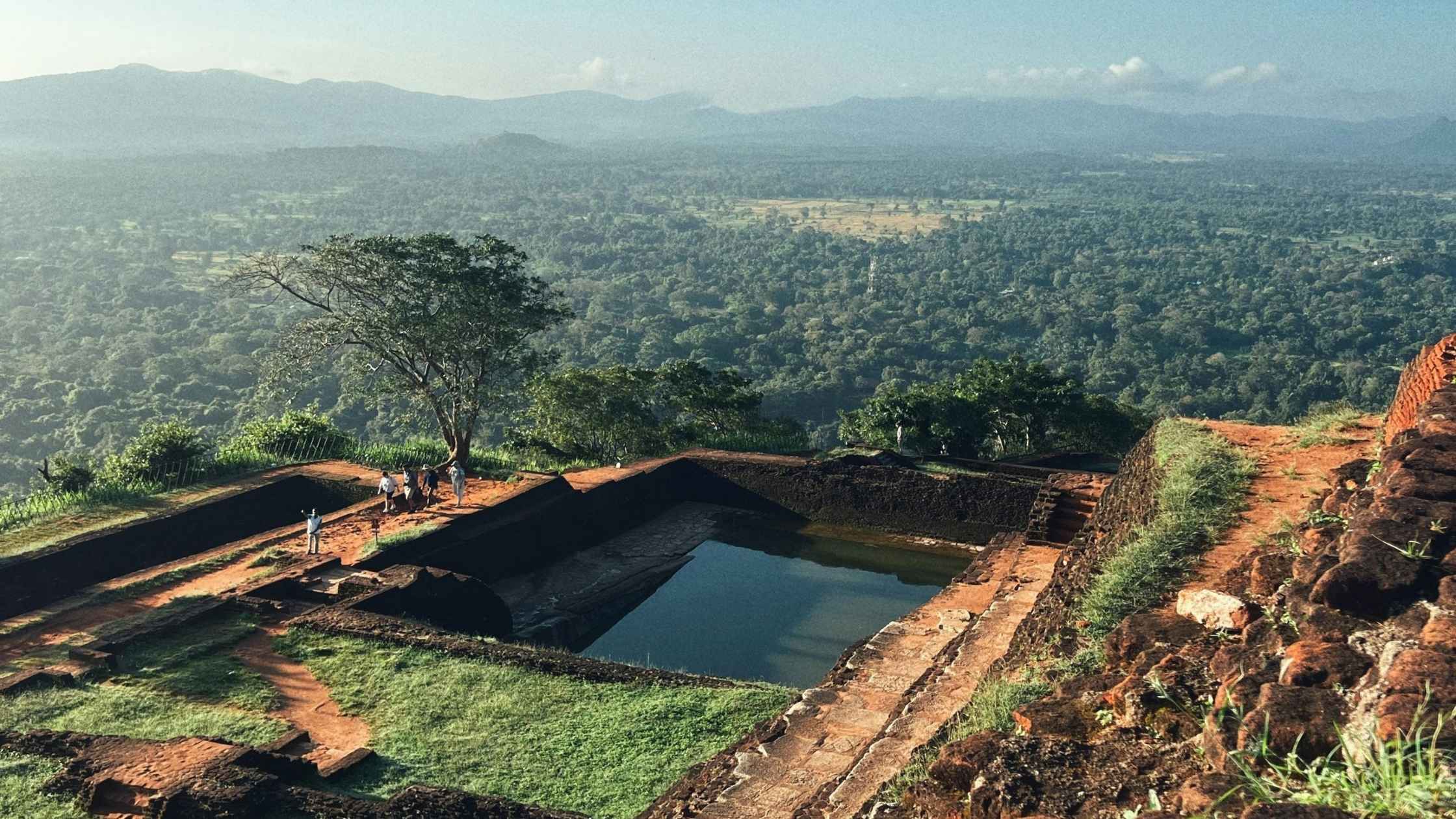
The summit demonstrates why Kashyapa chose this location as impossible. From the ruins of the palace, you have a vista of dozens of kilometers in every direction. Any army could not approach without being sighted. No enemy could besiege without days of advance notice.
This was not just a palace. It was the most strategic site.
The Smart Way to View Sigiriya
This is what the tour guides won't say to you.
The best time is not dawn. It's 7 AM sharp, when you're able to open the gates and have the rock to yourself for an hour.
The best sight isn't at the summit. It's from Pidurangala Rock, looking over the valley, where Sigiriya appears as Kashyapa's enemies would have seen it – an improbable position of power emerging out of the jungle like a rock giant.
The greatest photographs are not the ones you expect. They're the details: old hydraulic channels still flowing, frescoes painted with pigments that can't be classified by modern chemistry, staircases cut into living rock.
What This Is Going To Set You Back (And Why It's Worth Every Cent)
Yes, $30 is high for one of these attractions. This is the reality check.
You're not paying for the expense of a tourist destination. You're paying for the capability to witness one of humanity's greatest achievements. A World Heritage Site that attracts archaeologists, engineers, and artists from around the world.
Place that in context with what you'd pay for a Broadway show or a professional sporting event. Those are 2-3 hours. Sigiriya has been performing for 1,500 years.
And unlike most tourist attractions, it gets better the better you know it.
The Secret They Don't Want You to Know
All the travel websites tell you to hire a guide. They're right, but for reasons they don't realize.
You don't need a guide to inform you of the history. You need a guide to show you what you're missing.
The secret chambers in the Boulder Gardens. The water channels that still supply villages around. The sight lines between defense works. The astronomical alignments in the palace layout.
These aren't in the manuals. They're in the brains of local experts who've spent years studying this site.
A good guide makes Sigiriya from a handsome ruin into a living work of engineering genius.
Beyond Sigiriya: The Cultural Triangle Experience
Here's where most tourists get it wrong. They visit Sigiriya and depart.
But Sigiriya is merely the warm-up act.
Thirty minutes away, Dambulla Cave Temple holds 2,000-year-old Buddha statues and ceiling paintings that are on par with the Sistine Chapel. An hour and a half away, Polonnaruwa uncovers the remains of a medieval capital that once competed with Baghdad and Constantinople.
Together, the three sites form Sri Lanka's Cultural Triangle – a group of ancient marvels to be seen nowhere else on the planet.
Where to Stay: The Insider's Guide
Budget options leave you in Dambulla town. Convenient, but you'll be missing the magic.
Mid-range options offer garden views and pools. Pleasant, but forgettable.
The real insider tip? Stay within walking distance of Sigiriya village. Wake up to the rock fortress in your window. Sleep to the sound of rural Sri Lanka.
From there you can get in the entrance gate before the tour buses and just go on. You can return for sunset shots when you don't have to rush. You can see Sigiriya the way it was meant to be viewed – as a part of the landscape, not separated from it.
The Choice You Make
You have two choices.
Option one: Visit Sigiriya like everyone else. Get the standard photos. Check it off your list. Go.
Option two: Rejoice in what you're actually seeing. Relish the engineering geniuses. Connect with the past. Bring home stories that will amaze people for the rest of your life.
The rock fortress is there either way. But just one option does justice to what King Kashyapa constructed.
Your Sigiriya Strategy
Arrive early. The gates open at 7 AM and those first two hours are pure gold.
Bring water, but not too much. You're here to see the scenery, not concern yourself about your equipment.
Savor each section. The Water Gardens are not just a path to the top – they're an education in ancient city planning.
Don't rush the frescoes. These aren't just pieces of art – they're portals into a lost world.
And when you finally arrive at the top, don't just pose for photographs. Sit for a minute where Kashyapa sat. Look out over his kingdom. Try to imagine ruling an empire from this impossible throne.
The Journey That Awaits
Arriving at Sigiriya requires commitment. Four hours from Colombo. Three hours from Kandy. This is not a day trip.
But all part of the journey. Through Sri Lanka's heartland, along roads that wind through rice paddies and temples as old as history, you're tracing routes that connected civilizations for millennia.
When you arrive at Sigiriya, you're not just looking at a view. You're completing a pilgrimage.
Why This Matters
In an era of steel and glass, Sigiriya shows us what we can achieve with stone and imagination.
In an age of instant access, it shows us what human beings can do when we will not accept anything less.
In a world of forgettable journeys, it gives you one to remember.
King Kashyapa built Sigiriya to last an eternity. 1,500 years later, his citadel still leaves you gasping for breath.
Some vacations you take for pleasure. Others you take for perspective.
Sigiriya is both.
The question isn't whether you should go to Sri Lanka's ancient rock citadel.
The question is, are you ready for what you will discover when you do?