
Picture This
You stand on a boat deck, morning sun on your face. Before you lie the Indian Ocean.
And then you see it.
A spout of water ascends 30 feet above the waterline. Your heart seizes. The largest life form the Earth has ever known materializes just 100 yards away.
This is no fantasy. This is Mirissa, Sri Lanka, where it is not only possible but likely that you will meet a blue whale.
Here's What Nobody Warned You About Whale Watching
Most whale watching locations guarantee the world. Then you're stranded on rocky seas for hours, neck cramped towards desolate skies, wondering if you've been duped into a fantasy.
Mirissa is not like that.
The success rate here exceeds 90% during peak season. That isn't marketing fluff, that's what you get when geography and timing align perfectly in nature.
Why Blue Whales Visit Mirissa (And Why You Must Join Them)
Deep ocean chasms are only miles from this serene Sri Lankan shoreline. Blue whale freeways, these behemoths teem with the krill these leviathans feed upon.
At other locations where you chase rumors, here the whales hail in a set pattern. They sail through these waters from November to April, where they graze in the same locations that the ancestors grazed for centuries.
The maths is simple: More whales + good spot + calm seas = your chance of a lifetime.
Season of Change
January to March transforms Mirissa into the world's blue whale capital.
Why? The monsoons have departed. The seas calm to glassy perfection. The visibility reaches the horizon. And the whales? They're here in such quantities that oceanographers still can't comprehend.
But here's the secret most operators won't tell you: November and December have something good going on too. Fewer people. Ideal conditions. And whales that are practically curious about the few boats hogging space in their presence.
April marks the end of the season, but by no means the end. The seas become more lively, yes, but the whales hang on. For photographers and adventurers with no objection to a bit of ocean spray, April provides drama that calm-sea months can't compete with.
Your Morning Will Start Like This
5:30 AM. Your phone rings.
By 6:00 AM, you're walking through Mirissa's small fishing harbor. The air smells of salt and diesel fuel. Fishing boats return with the night's catch while your vessel prepares for a different kind of hunting.
The first 30 minutes are magic in themselves. Sunrise over the Indian Ocean while dolphins race alongside your boat. Flying fish skip across the water. This isn't just transportation, it's the opening act.
Then your captain kills the engine.
You've reached the edge of the continental shelf, where the ocean floor drops from 100 feet to over 3,000 feet. This is a giant country.
What Happens When You See Your First Blue Whale
Nothing prepares you.
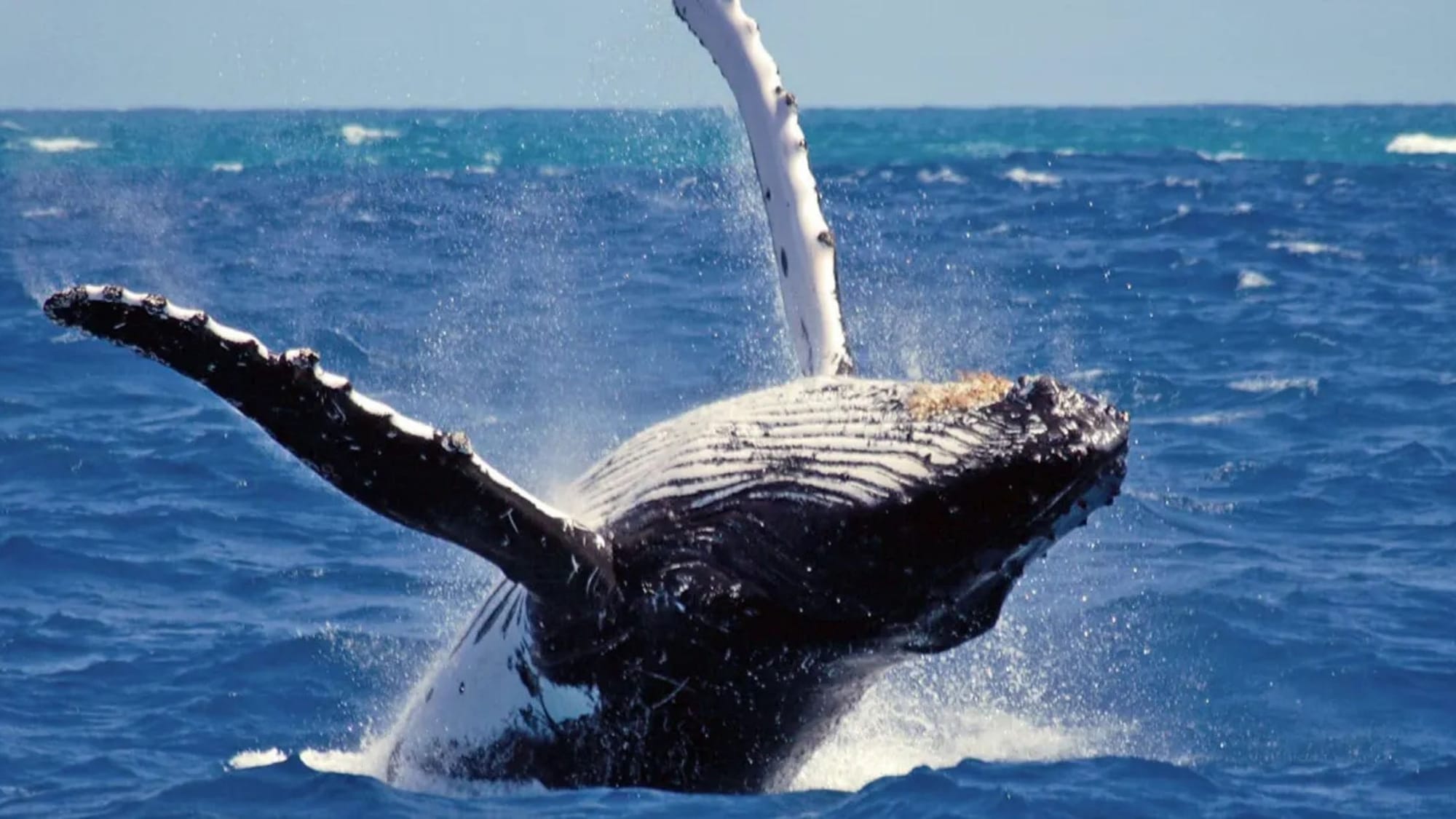
Then they spout a column of fog shooting straight up to as high as 30 feet. Then the back, as long as a school bus, gliding with impossible grace through the water.
If you're fortunate, you'll catch the dive. The giant tail flukes lift slowly out of the water, water streaming off edges as wide as 20 feet. Then, nearly without making a splash, 80 tons of whale disappear into the blue.
Professional photographers will fly thousands of miles for such moments. You will have multiple opportunities in one morning.
Selecting Your Boat (This Is More Important Than You Might Realize)
Not all whale watching is created equal.
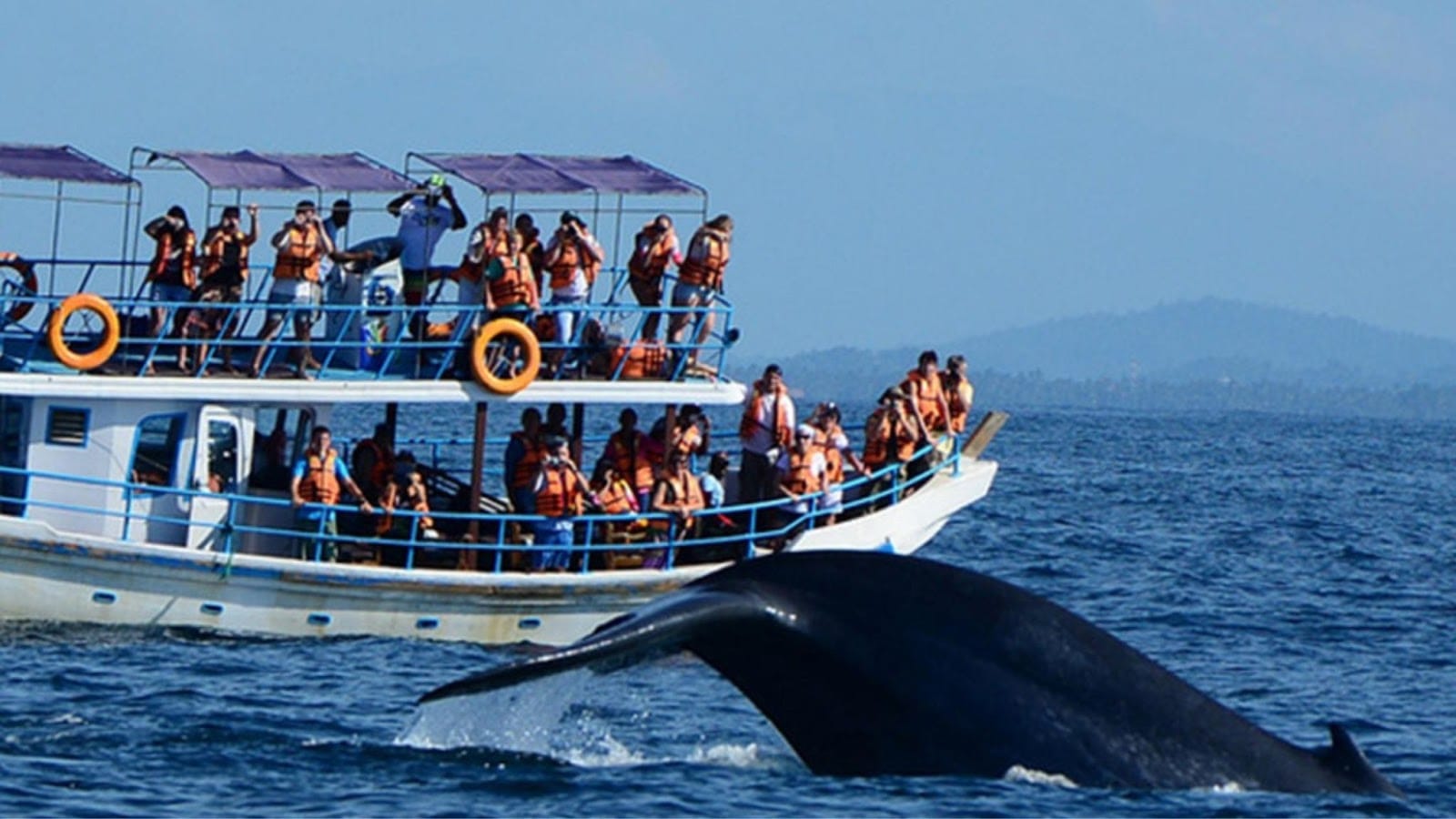
Average boats pack 30+ individuals onto boats that are meant for coastal fishing. Everyone crowds on one side when whales appear. The engine noise carries under water for miles. You witness a whale sighting, but you witness a crowd experience too.
Smaller vessels limit passengers to 15-20 people. They use less intrusive engines. They provide a respectful distance that actually heightens your viewing experience, unstressed whales surface more frequently and stay longer in sight.
Luxury catamarans are comfortable and stable, but at a cost. The boat's larger size bars you from approaching small bays where whales nuzzle near the surface now and then.
Consider your priorities: Cheap crowds, intimate small groups, or luxury comfort. All offer genuine blue whale experiences, but the experience is worlds apart.
The Investment (And Why It's Worth Every Rupee)
Standard tours cost $35-50 per person. That's breakfast, safety equipment, and roughly 4 hours on the water.
Small-group premium tours are $70-90. You pay extra for fewer people, less commotion on the boats, and guides well aware of whale behavior patterns learned over years of watching them every day.
Catamaran luxury charters are $100+ per person. You get food, drinks, stable shooting platforms, and bathroom facilities that are worth more than you know after 4 hours at sea.
Private charters are $300 and up for small groups. Complete control over timing, place, and length. For committed photographers or for families who want to be flexible, the math generally is in your favor.
What to Pack (The Secret Stuff)
Motion sickness medication. Take it prior to your doing so. Even on tranquil seas, the excitement of whale watching can strike unsuspected victims unaware.
Sunscreen. Sea glare doubles UV rays. What begins as a nice a.m. becomes agonizing sunburn by afternoon.
Light jacket or windbreaker. Early morning sea breezes cut through cotton t-shirts. Easy to shed layers, not so easy to add what you do not possess.
Camera with zoom. Being mindful of whale space means your cell phone camera will not capture the detail these moments deserve.
Reusable water bottle. Plastic pollution hurts the same ocean animals you've grown to love.
The Responsibility That Comes With Wonder
Blue whales are threatened. There are fewer than 25,000 worldwide.
Your operator selection says something. Harasses whales with boats, revs engines near pods, or takes up room directly in swim lanes in lieu of short-term photo opportunities over conservation long-term.
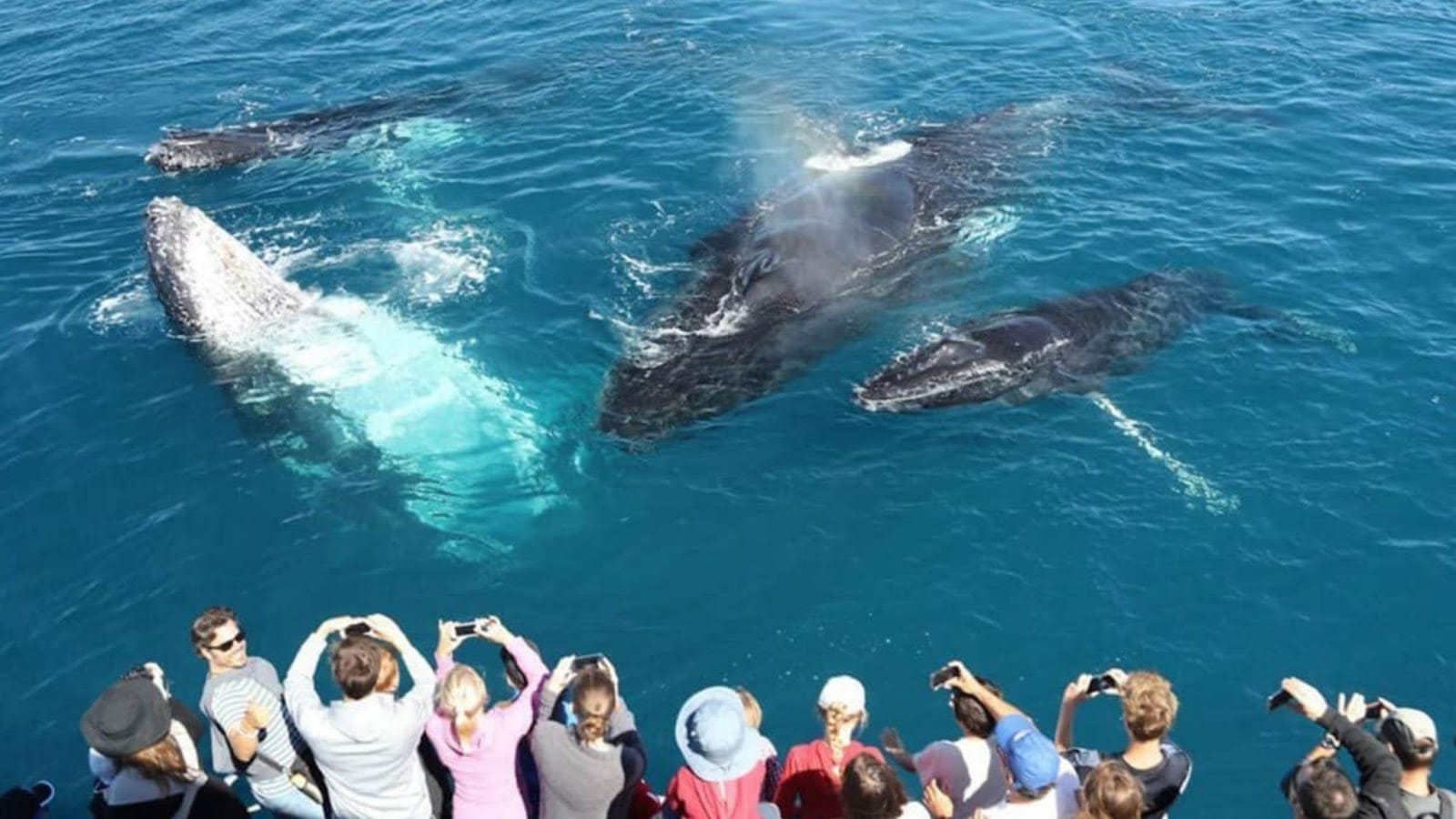
Responsible boat operators maintain a 100-meter distance, limit engine noise, and never position boats in whale travel routes. These behaviors actually improve sightings of unstressed whales that rise to the surface predictably and remain visible for longer.
Your booking decision makes the practices that succeed in Mirissa's competitive market.
More Than the Whales
Mirissa has more than one magic morning.
Secret Beach lies hidden between the coconut trees to the south of the central harbor. Few tourists stumble upon this crescent beach where the fishermen mend nets in the afternoon sunlight.
Parrot Rock provides sunsets over the Indian Ocean. The short hike rewards travelers with vistas that are worth the reason whales choose these waters.
Surfing breaks at Coconut Tree Hill offer lapping waves perfect for beginners. After the adrenaline of whale watching, catching your first Sri Lankan wave feels like the next natural step.
Galle Fort day trips combine colonial architecture with modern cafes. The World Heritage site is only 45 minutes along the coast, perfect for an afternoon visit.
Where to Rest Your Head
Budget tourists enjoy clean, friendly accommodations at Morning Star Guesthouse. The family-run hotel is within walking distance of the harbor and offers early-morning breakfast service suitable for whale-watching tours.
Paradise Beach Club offers mid-range comfort on Mirissa Beach. Rise to sea views, breakfast at the in-house restaurant, then walk to your boat departure.
Cape Weligama embodies luxury accommodation with cliffside drama views. The resort is 20 minutes away from Mirissa harbor but offers transport for guests boarding whale watching excursions.
Proximity is important for early morning departures. Closer accommodation equals more sleep before your wake-up call at 5:30 AM.
The Truth About This Experience
Blue whale watching in Mirissa lives up to its expectations in ways that few wildlife excursions can compare to.
You will see whales. The success rates aren't marketing exaggeration; they reflect geographic reality and seasonal patterns that have remained consistent for years.
You will be moved by the encounter. Whether it's your first whale sighting or your fiftieth, watching an animal the size of a small building move with grace through its natural environment creates lasting memories.
You will want to come back. Most visitors reserve second trips before their initial tour concludes. Various seasons provide different experiences, peaceful seas and optimal visibility during high season, theatrical conditions and feisty whales during shoulder season.
You will see why these giants need to be protected. Conservation becomes a concrete concept to personal cause following your initial close encounter.
Your Next Step
Mirissa's blue whale season is from November to April. The best conditions are from January to March.
High-season operators are booked weeks in advance. Budget operators usually have same-day travel availability, but high-end small-group trips require planning ahead.
Weather may require cancellations, so build flexibility into Sri Lankan travel. Most people book 2-3 days in Mirissa to ensure the best conditions.
Wake up early. Prepare for magic. And be prepared to meet the friendly giants of the Indian Ocean.